THE CYCLE / STAGE 01
Collect
& store.
Rain and runoff come off roofs, yards and hardstanding, and are held underground until the site needs them. The collector is the store — and either product does this job.
One intake, two ways to hold it.
Every drop that falls on a plant yard, access road or roof has to go somewhere. Gullies and channel drains take it off the surface and drop it straight into the buried line, where it is held out of sight — as process water, fire-water reserve, irrigation stock, or simply as storm volume that must not reach the sewer all at once.
Which vessel holds it is the only real decision, and it comes down to volume and footprint.
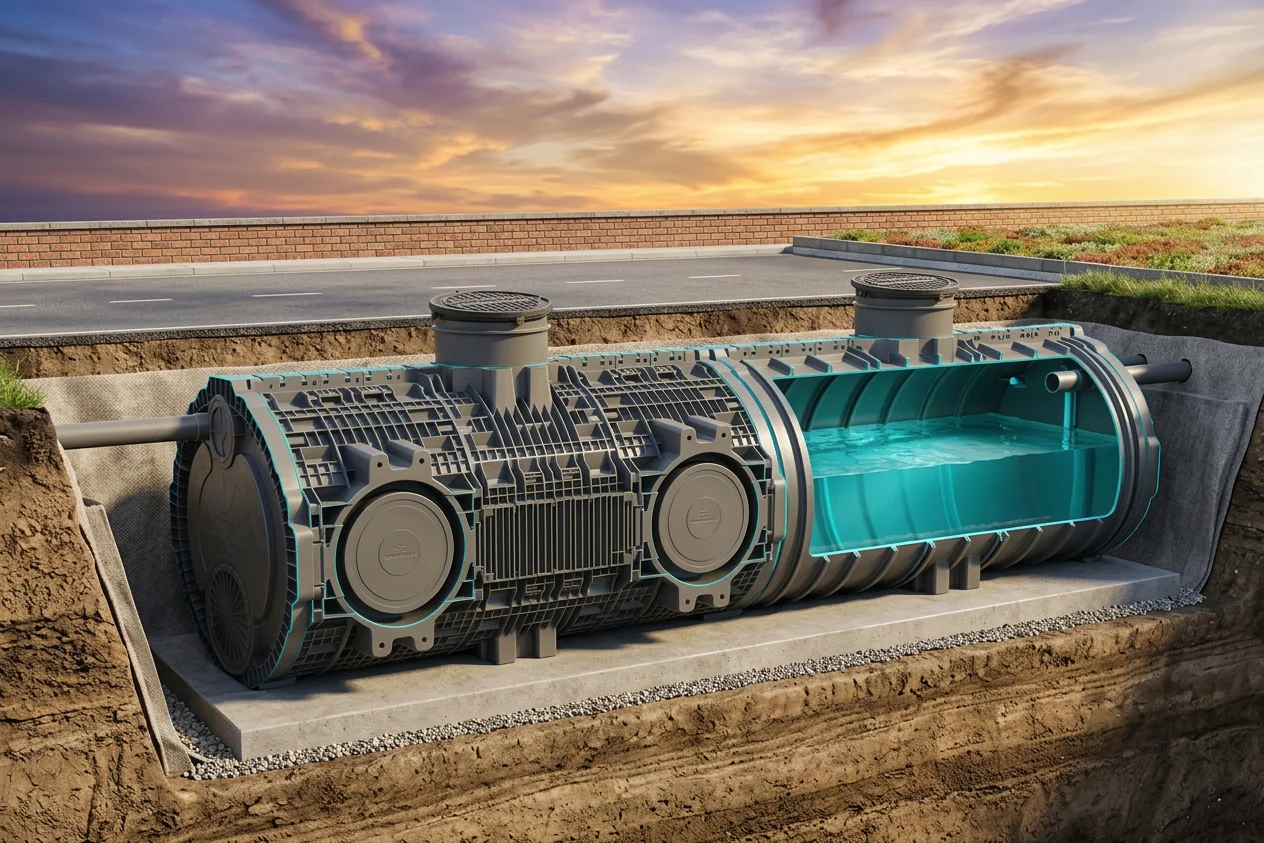
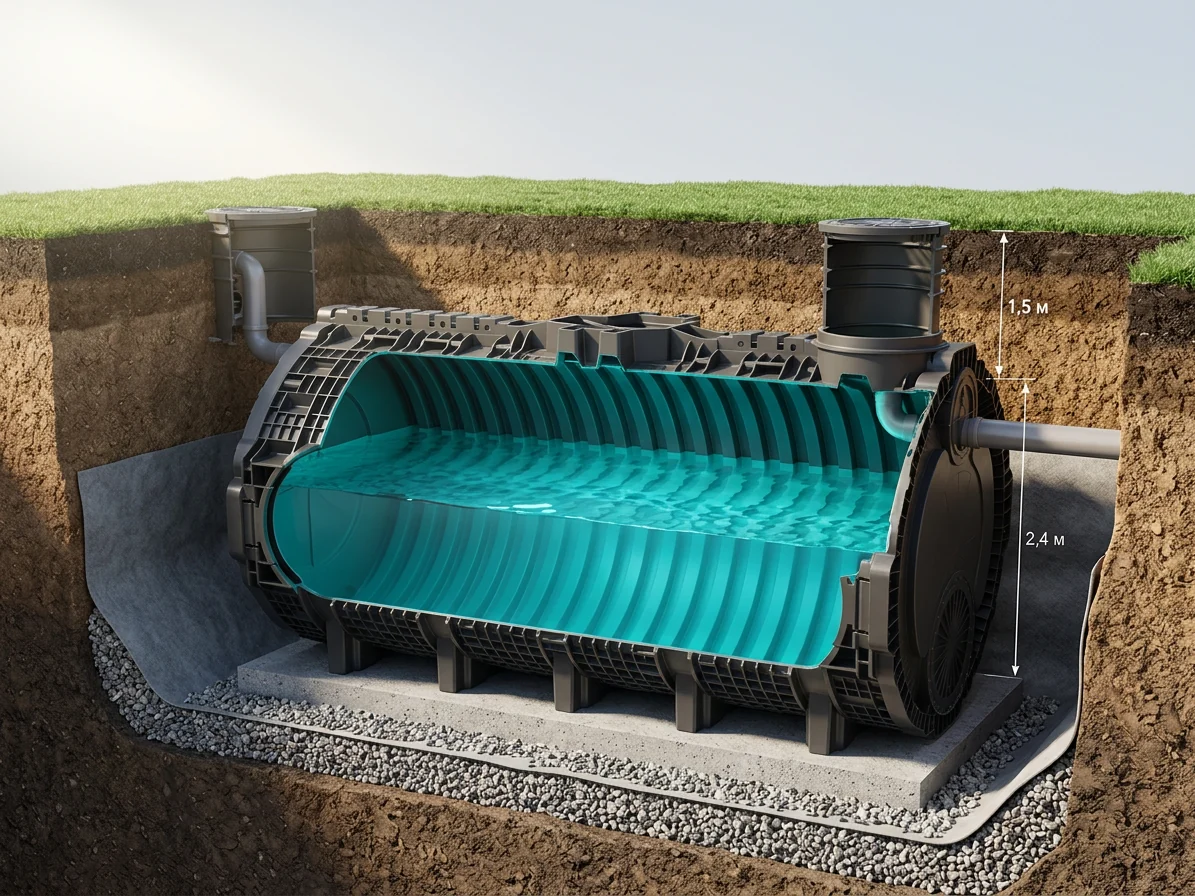
AquaBox — the sealed cylinder
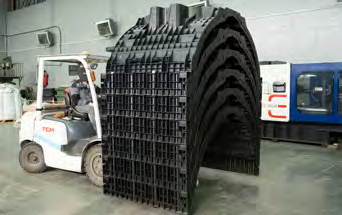
A stackable tank built from identical injection-moulded modules in mineral-filled polypropylene. Sealed, reinforced, and strong enough to bury to three metres. Best where you need a watertight engineered vessel and where treatment or pumping will sit on the same line — practically, up to about 300 m³.
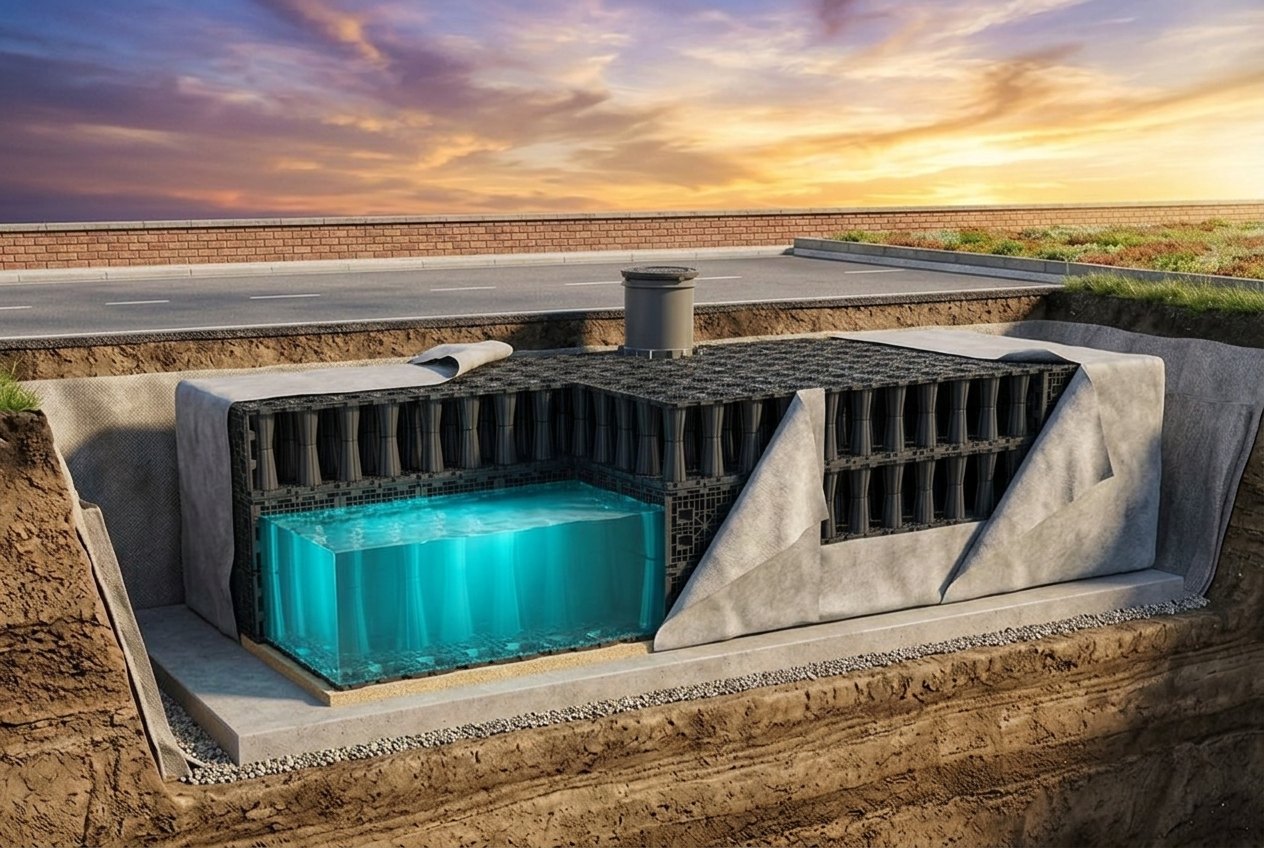
BlockTech — the lined crate field
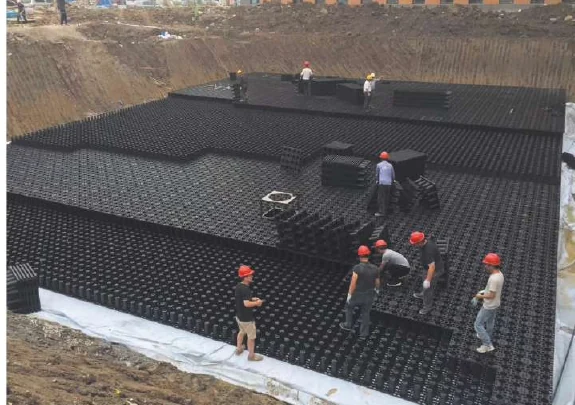
Snap-together blocks laid like brickwork and wrapped in a geomembrane to make them watertight. Fills up to 95% of its own volume with water, takes any footprint you can excavate, and carries vertical load so it can sit under a yard or access road. Best where you need a lot of cheap cubic metres — above about 300 m³.
How it goes in
- Excavate and level. Pit prepared to a single level, base compacted, bedding laid.
- Lay the liner. Geotextile and — for a sealed build — geomembrane, with overlap at every joint.
- Assemble by hand. Modules carried in and locked together. No crane, no heavy plant.
- Connect the line. Inlet, outlet and inspection necks fitted to the surface.
- Backfill. The surface goes back into use and the tank disappears.